

What sold it
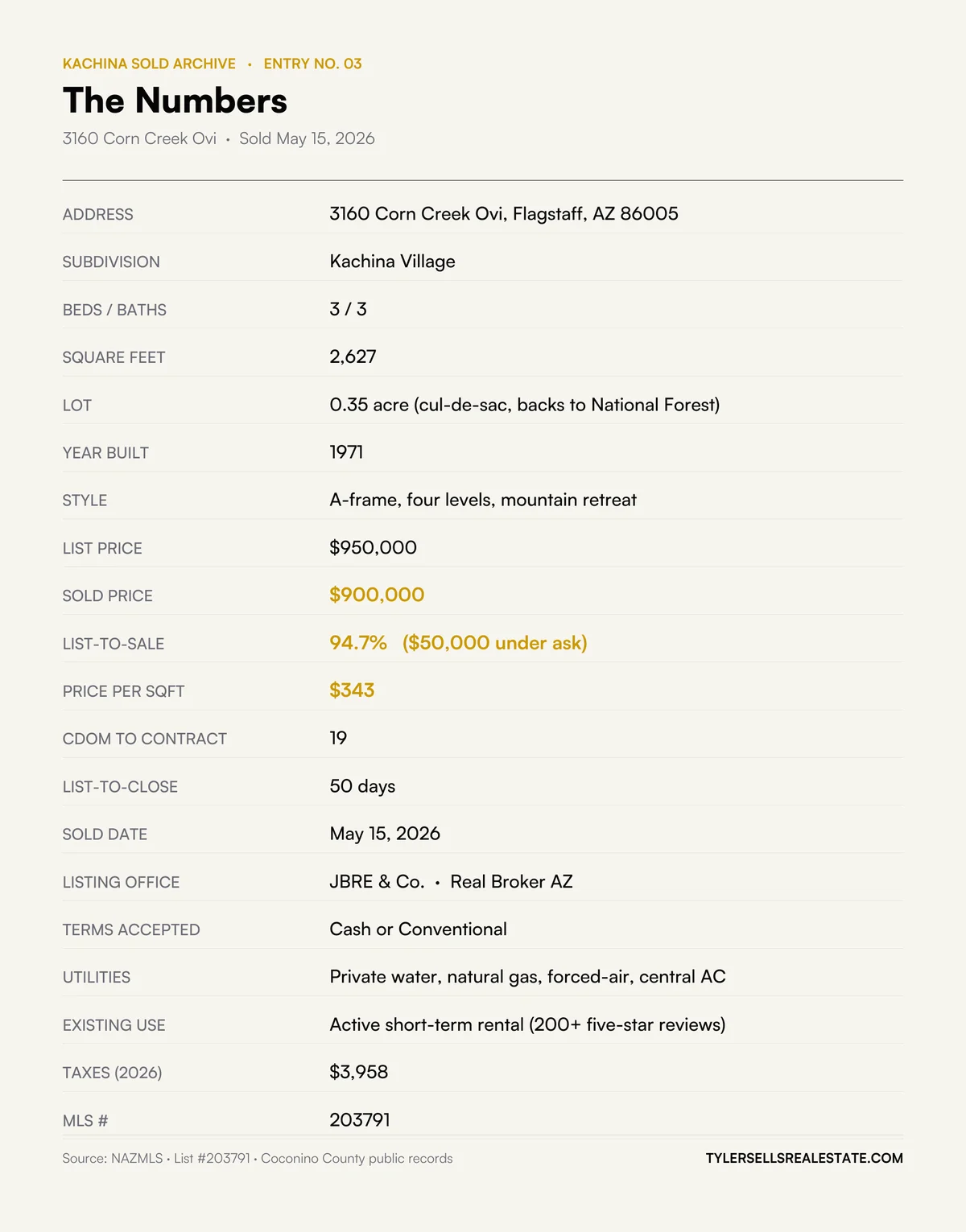
A 1971 A-frame on a 0.35-acre cul-de-sac lot in Kachina Village closed on May 15, 2026 for $900,000 — 94.7% of its $950,000 asking price, under contract in 19 days, closed in 50. On paper that reads like a soft result. It is not. It is a trophy property closing near the top of the Kachina range in a stretch where nothing else in the neighborhood was trading anywhere close to that price point. The story behind that number is a marketing and pricing problem we had to solve on purpose.
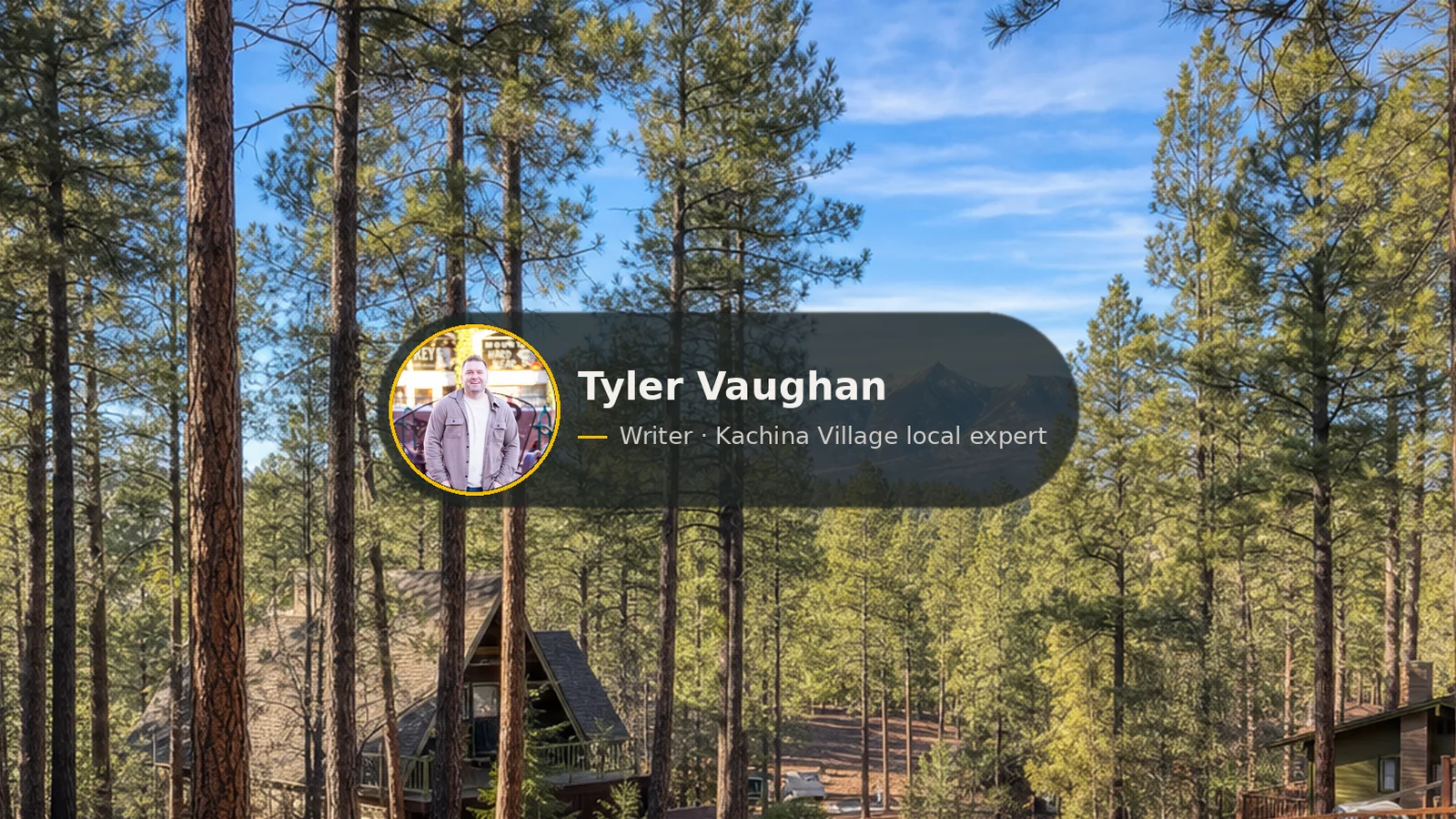
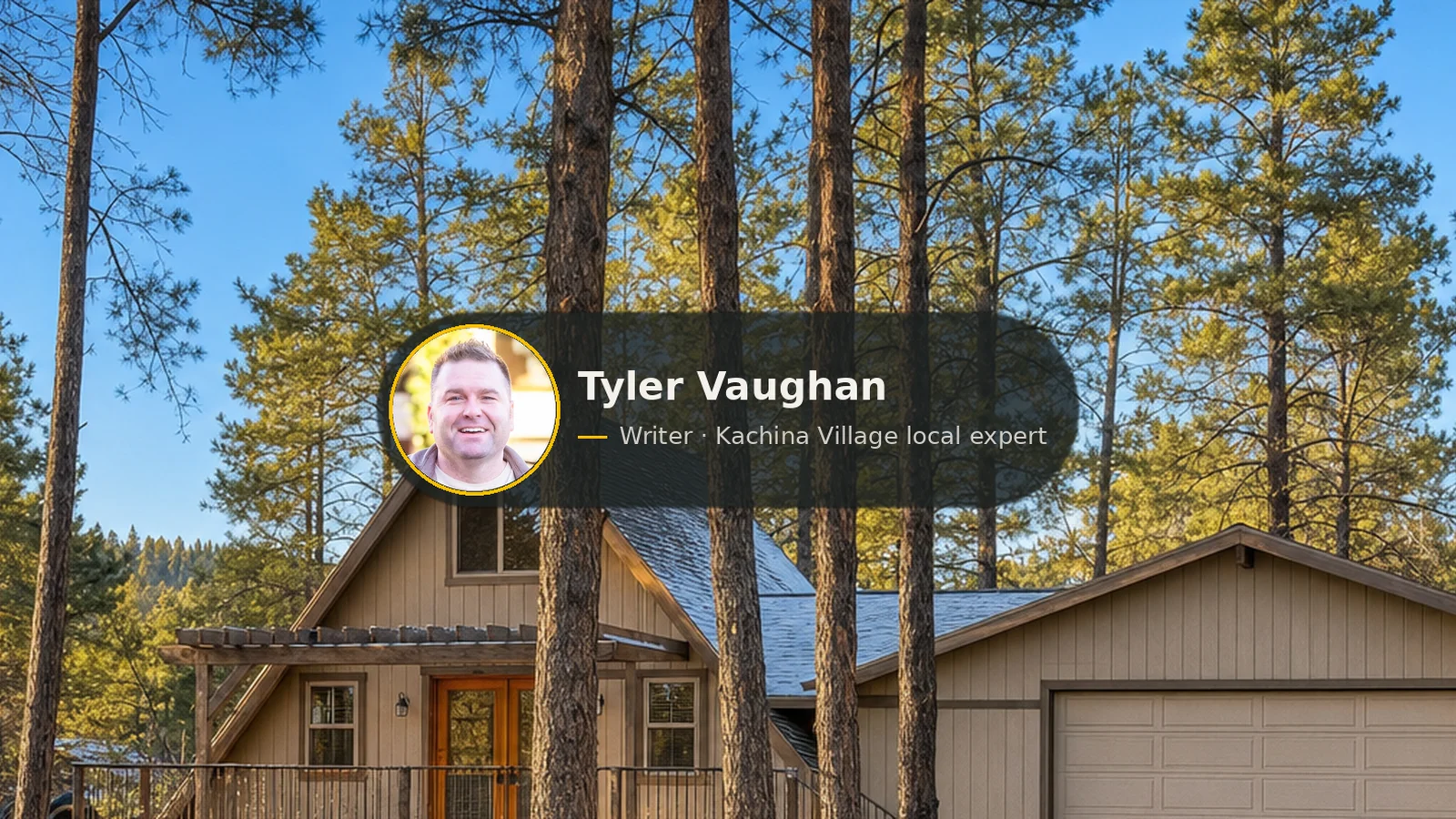
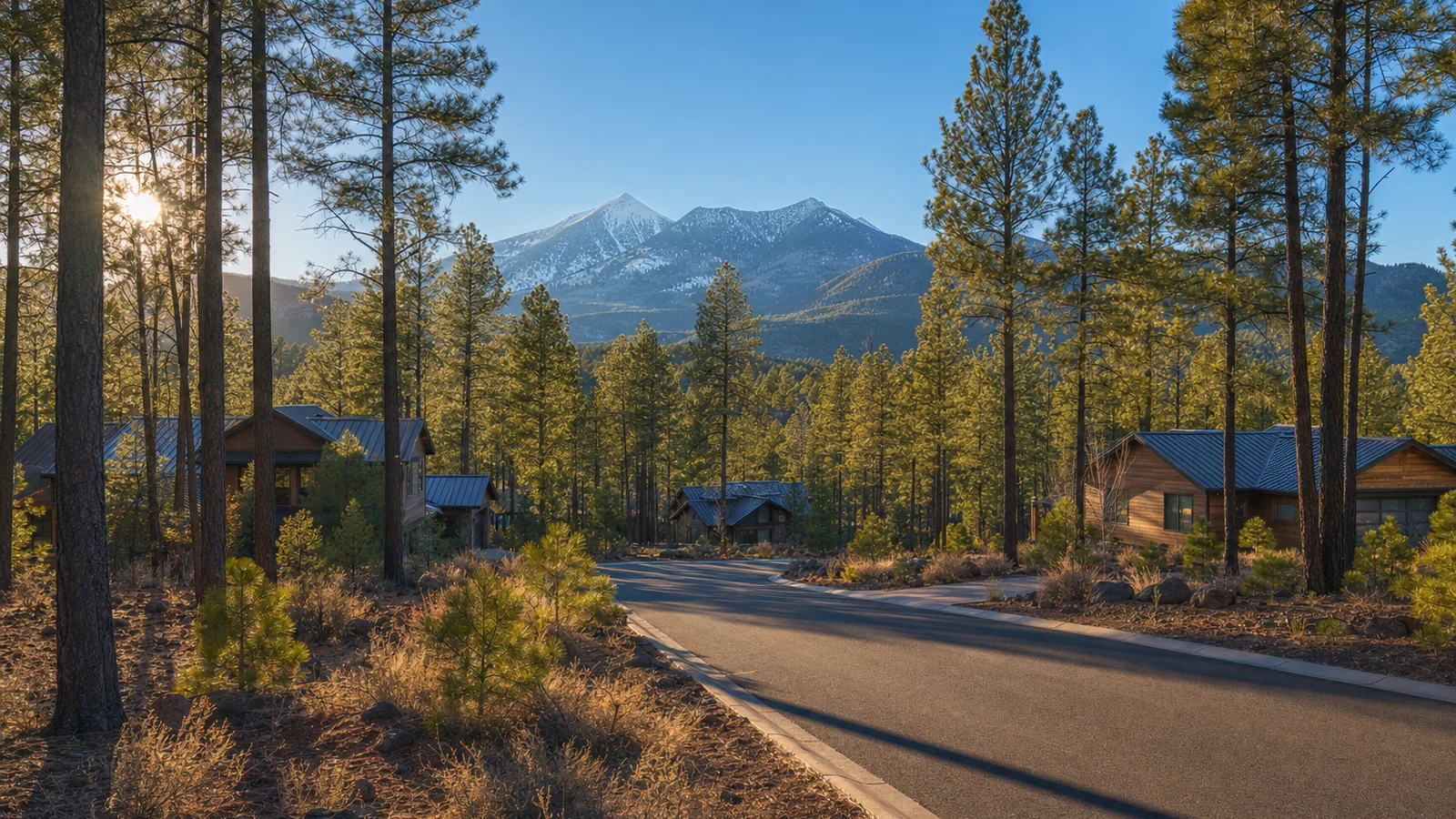
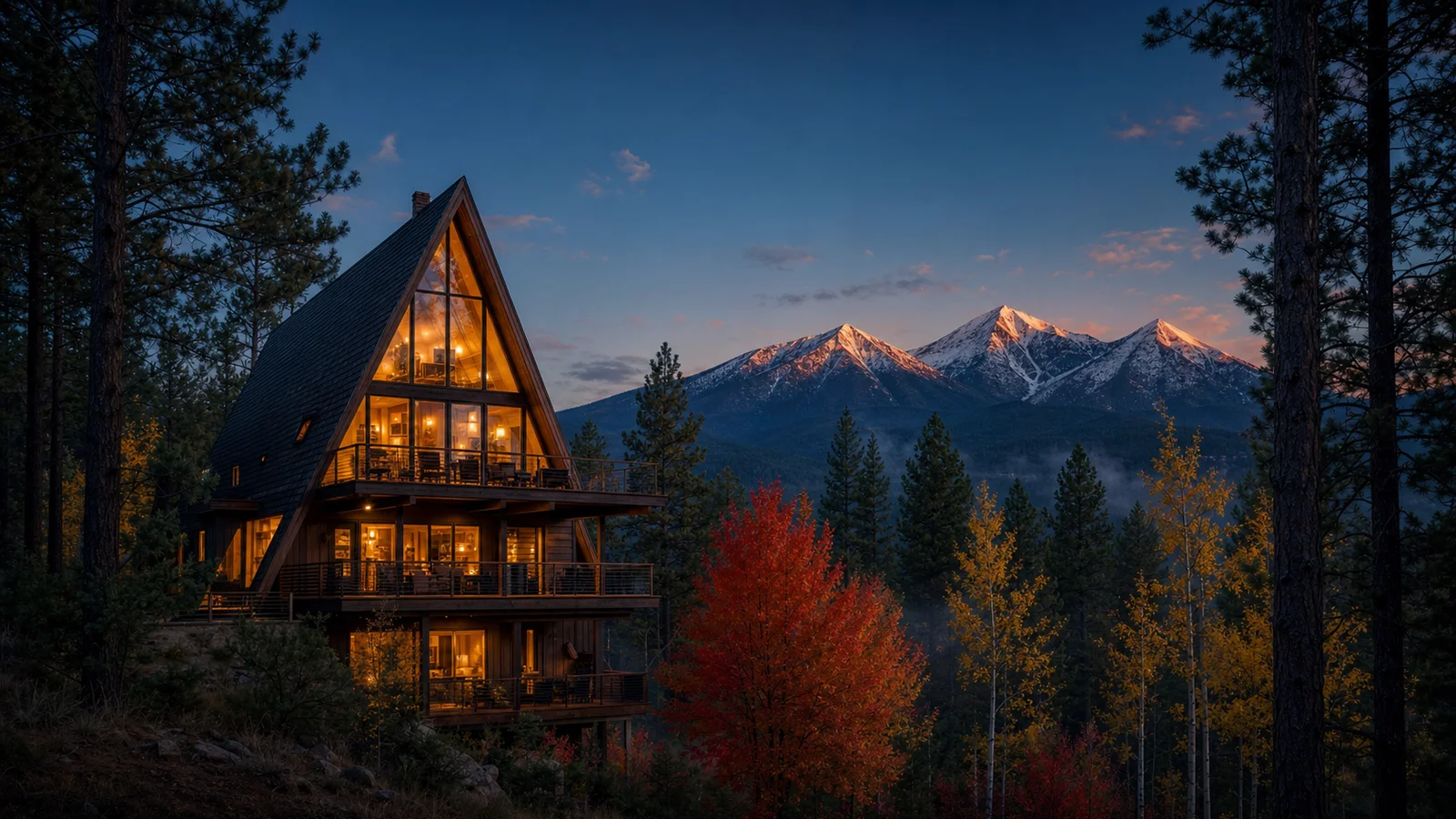
First, what the house actually was. Three bedrooms, three baths, 2,627 square feet spread across four levels. Floor-to-ceiling windows framing the snow-capped San Francisco Peaks. Wraparound decks that overlook National Forest land. Two fireplaces. A remodeled kitchen with natural granite and an island. A private sledding hill behind the home in winter. Ponderosa pines, flame maples, aspens. It reads like a Nat Geo caption because that is how the house shows in person. Add a 200+ five-star short-term rental track record on top of the real estate itself, and you have a property that is not comparable to the rest of Kachina Village.
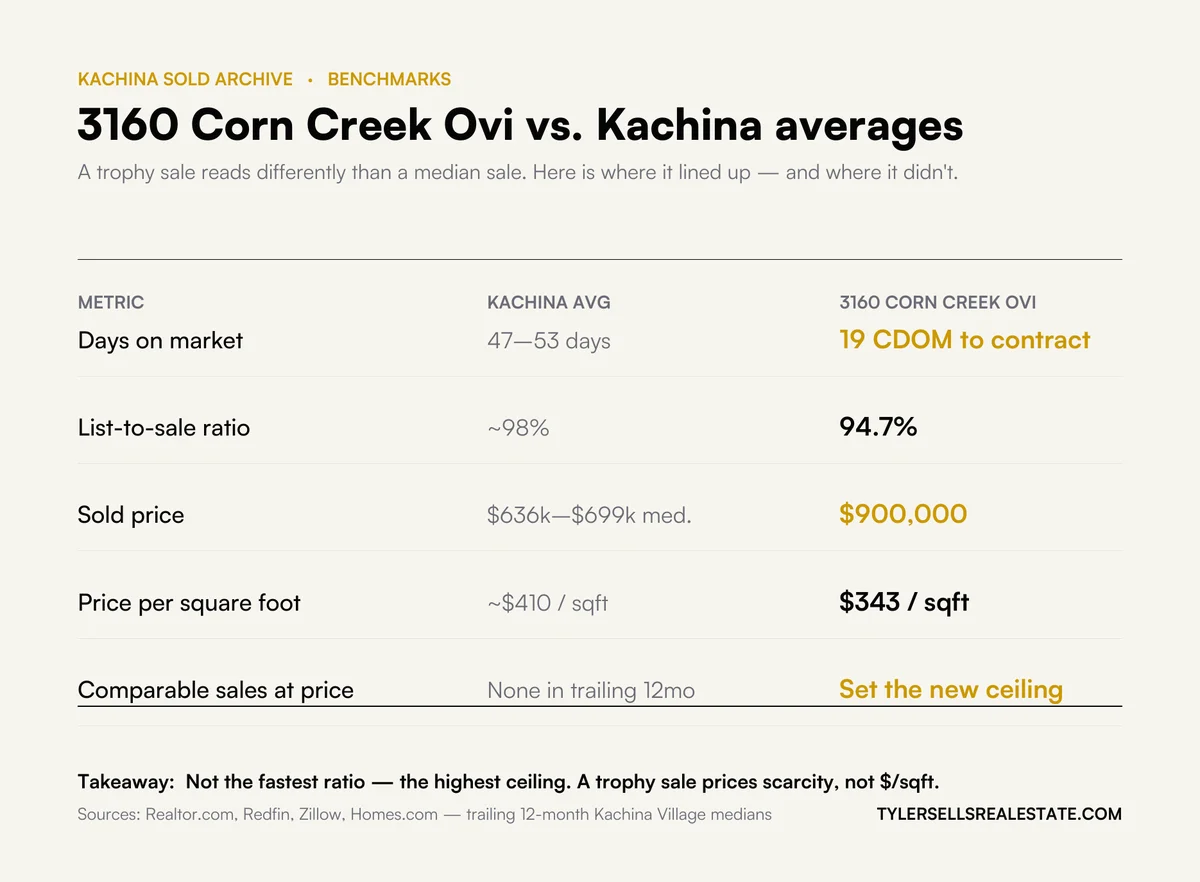
Second, the buyer we had to find. Kachina's trailing 12-month range is a $636,000–$699,000 median. Most Kachina buyers come in looking for a cabin in the $500,000–$750,000 band. This house was $950,000. That is not a Kachina buyer at that pricing — that is a Flagstaff buyer, a Phoenix or California second-home buyer, or a short-term rental operator running the numbers on an already-proven asset. The marketing had to reach past the neighborhood and land in three different buyer profiles at once.
Third, what closed the deal. Cash or Conventional only. A short-term rental pro forma delivered on request that showed the actual revenue history, not a projection. Photography and video that led with the peaks view and the National Forest backing, not the interior square footage. In a neighborhood where most listings sell on cabin charm, this one had to sell on the view, the land, and the income.
What almost didn't
The pricing problem was the pricing itself. At $950,000, this listing sat at or above the highest closed sales in Kachina Village over the trailing year. Most sellers hear "you are priced at the top of the range" and think that is a good thing. In practice, it is the hardest place to be. There are no direct comps to defend the number to an appraiser, no obvious buyer pool circling the neighborhood at that price, and every showing has to work harder because the buyer is comparing this house not to other Kachina homes but to everything else in Flagstaff at $900k–$1M.
We priced it there anyway. The bet was that the specific combination — the A-frame, the four levels, the peaks view, the National Forest backing, the STR track record — could not be found anywhere else in Kachina and would not be replaced by another listing during the search window. The bet worked, but only because the marketing did the work of a comp that did not exist on paper. Video, drone footage, and a pro forma packet took the place of a nearby $900k sale. The buyer had to believe the number without a neighbor to point to.
The $50,000 gap between list and sale is not a failure of pricing. It is the market's answer to a house that had no direct comp: buyer and seller met in the middle at the number the property actually cleared. If we had listed at $875,000, we would have closed at $875,000. Listing at $950k and closing at $900k put an extra $25,000 in the seller's pocket compared to that alternative, and it did it in 19 days to contract — not in six months of price reductions.
What this means for Kachina
A single trophy sale is not a trend. But it is a data point, and it is a specific kind of data point that matters if you own the top 10% of Kachina Village by square footage, view, or income potential.
For most Kachina homes — the 1,300–1,700 sqft cabin range on a standard lot — this sale is not your comparable. Your ceiling is still set by the $600k–$750k neighborhood band and by the pricing discipline we walked through in the 3008 Hotevilla entry. Do not read $343 per square foot at 2,627 sqft and translate it into $343 per square foot at 1,400 sqft. That math does not hold. Trophy sales price on scarcity, not on unit economics.
For the top of Kachina — the homes over 2,500 sqft, the homes on cul-de-sacs backing to Forest Service, the homes with peaks views, and any home currently operating as a proven short-term rental — this sale is a marker. It says the ceiling of the neighborhood is not $750,000 and it is not $800,000. In the right property, with the right marketing, and with a pricing strategy that accepts a 3–5% negotiation gap in exchange for reaching the correct buyer pool, Kachina Village trades at $900,000. That number now exists on the map.
If you are watching Kachina from the sidelines waiting for another home like this to hit the market — a four-level A-frame, forest-backed, peaks view, with a working STR history — you will be waiting a while. That is the whole point of a trophy sale. There is not another one behind it.
3160 Corn Creek Ovi was listed and sold by JBRE & Co. under Real Broker AZ. Reported here as our own transaction, with the pricing and marketing decisions disclosed openly, because Kachina homeowners deserve to see how the top of their market actually closes — not just what the sold price ended up being.

Written by
Tyler Vaughan
Northern Arizona's top-rated real estate agent with 350+ five-star reviews. Specializing in Sedona, Flagstaff, and Northern AZ luxury properties.
Ready to Make Your Move?
Whether you are buying or selling in Northern Arizona, Tyler is here to help you navigate the market with confidence.